

Original, creative and, at the same time, extremely functional: the design of this London store is defined by walls and ceilings entirely covered in printed, tensioned fabric. An innovative and sustainable choice that has made it possible to limit structural work on the walls, while allowing the space to be refreshed at any time and in a short timeframe.
The fabric-clad store in London
Original, creative and, at the same time, extremely functional: the design of this London store is defined by walls and ceilings entirely covered in printed, tensioned fabric. An innovative and sustainable choice that has made it possible to limit structural work on the walls, while allowing the space to be refreshed at any time and in a short timeframe.
#TheChallenge
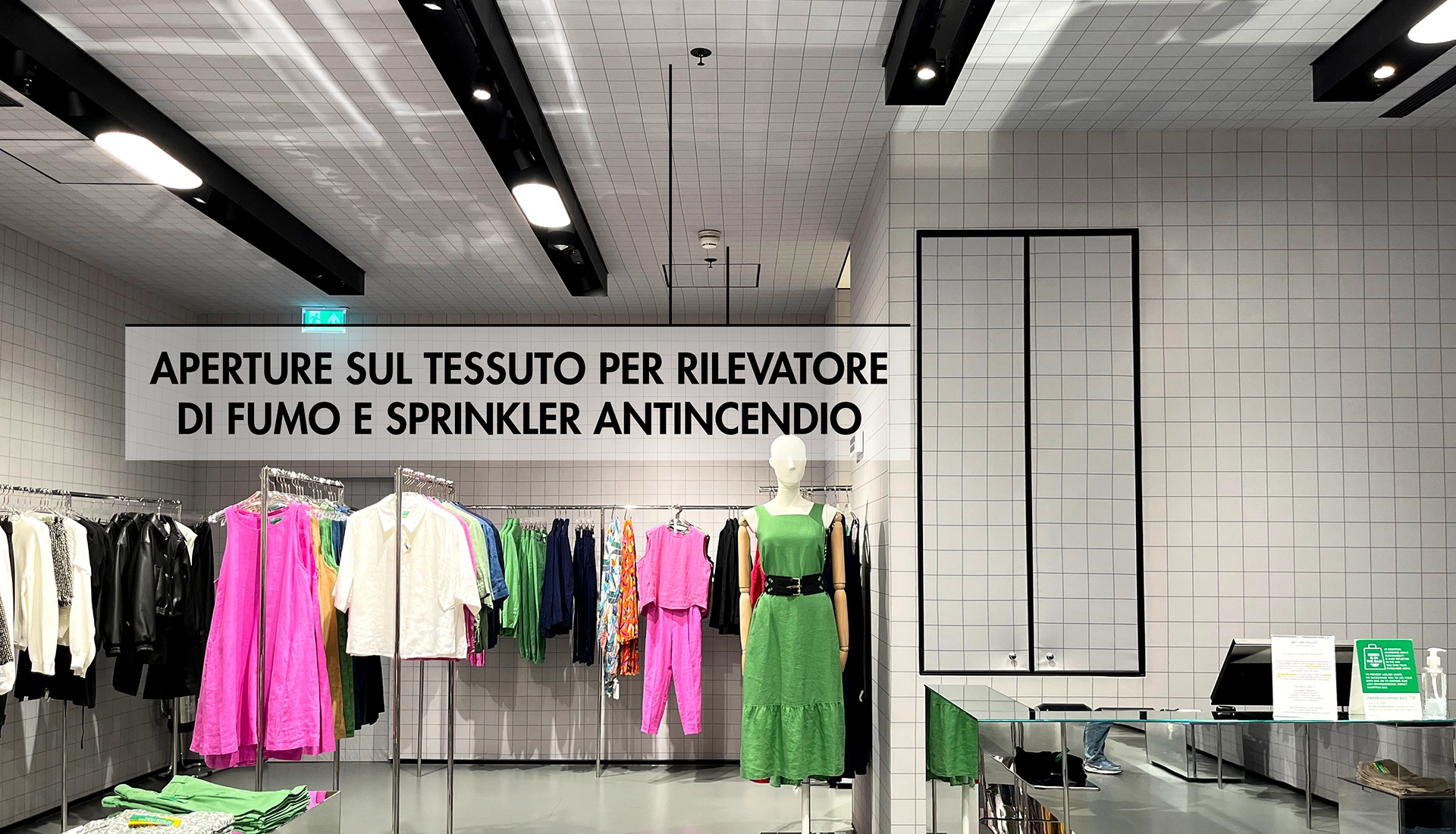
Walls, ceilings, hatches, doors, sensors: the challenge to be won in this project was to completely cover the store’s interior with printed, tensioned fabric, integrating — and “camouflaging” — the various elements present.
#TheChallenge
Walls, ceilings, hatches, doors, sensors: the challenge to be won in this project was to completely cover the store’s interior with printed, tensioned fabric, integrating — and “camouflaging” — the various elements present.
#RetailRevolution
Using a flexible material like fabric makes it possible to revolutionize the concept of interior design for a store, giving aesthetic value to every detail and making the fit-out simple to customize and renew.
#RetailRevolution
Using a flexible material like fabric makes it possible to revolutionize the concept of interior design for a store, giving aesthetic value to every detail and making the fit-out simple to customize and renew.
#BecauseWeCare
Fully covering the store’s interior — with a minimal graphic design in which the continuity of the lines is essential — required extreme care, attention and precision at both the design and execution stages. All the fabrics were, of course, produced and “sewn” to the exact measurements of the space, like tailor-made garments.
#BecauseWeCare
Fully covering the store’s interior — with a minimal graphic design in which the continuity of the lines is essential — required extreme care, attention and precision at both the design and execution stages. All the fabrics were, of course, produced and “sewn” to the exact measurements of the space, like tailor-made garments.
#AllestimentoSostenibile
Choosing fabric to fit out the store proves to be a sustainable choice in several respects: this material is sublimation-printed with eco-friendly inks free of harmful solvents, and the graphics can easily be renewed by replacing the coverings — without adhesives, without damaging the walls, and without costly structural work.
#AllestimentoSostenibile
Choosing fabric to fit out the store proves to be a sustainable choice in several respects: this material is sublimation-printed with eco-friendly inks free of harmful solvents, and the graphics can easily be renewed by replacing the coverings — without adhesives, without damaging the walls, and without costly structural work.
The project for the London store
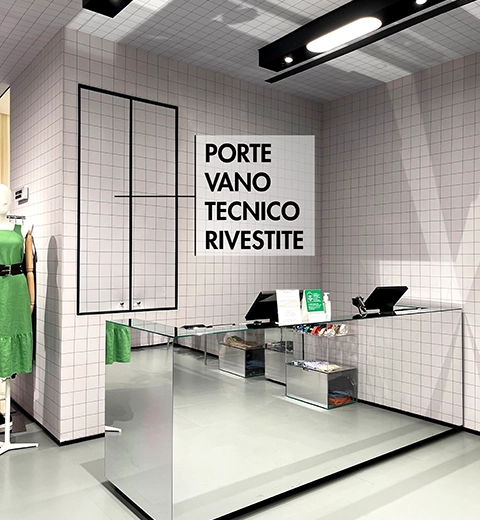
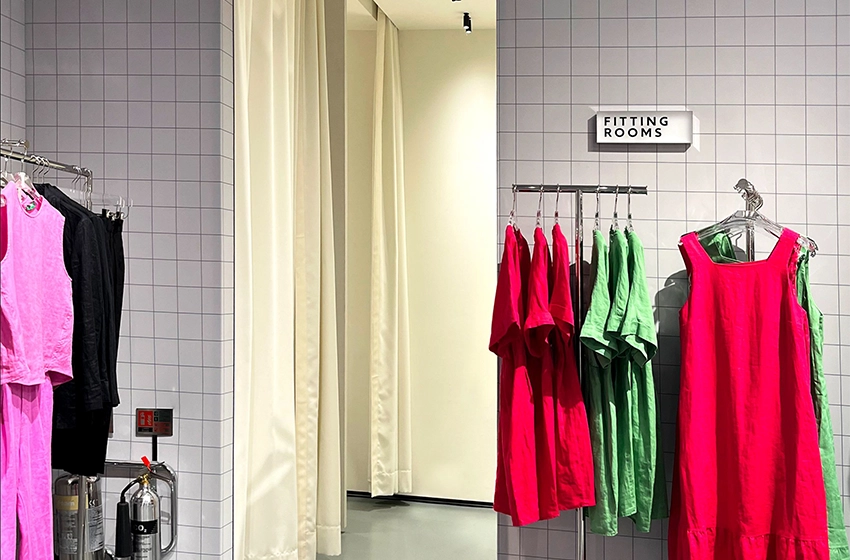
Fully covering the interior of this London store required as much as 450 square meters of sublimation-printed fabric. Ultra-thin profiles were fitted along the perimeter of the wall surfaces, and the fabric was then fixed and perfectly tensioned into place. Every element present on the walls and ceilings was integrated into the design: hatches and doors were likewise covered in fabric, while dedicated openings were cut into the ceiling panels for lights, smoke detectors and fire sprinklers.
With any material other than fabric, a project like this would have been impossible!
Beyond its tailored quality, using this material in interior design offers numerous advantages: it is sustainable, flexible, customizable, and makes it possible to build, cover and transform spaces without undertaking long and costly construction work.
The project for the London store
Fully covering the interior of this London store required as much as 450 square meters of sublimation-printed fabric. Ultra-thin profiles were fitted along the perimeter of the wall surfaces, and the fabric was then fixed and perfectly tensioned into place. Every element present on the walls and ceilings was integrated into the design: hatches and doors were likewise covered in fabric, while dedicated openings were cut into the ceiling panels for lights, smoke detectors and fire sprinklers.
With any material other than fabric, a project like this would have been impossible!
Beyond its tailored quality, using this material in interior design offers numerous advantages: it is sustainable, flexible, customizable, and makes it possible to build, cover and transform spaces without undertaking long and costly construction work.